Coding in Class 6 Under NEP 2020: What It Means and How to Start
NEP 2020 brings coding and computational thinking into the middle grades. Here's what that asks of schools, and a realistic way to begin without overloading teachers.
By the Univerzia AI team3 min read
The National Education Policy 2020 lists coding among the subjects to be introduced from the middle stage, which covers Classes 6 to 8, and puts strong emphasis on mathematical and computational thinking throughout school. For many schools this raises practical questions: who will teach it, where does it fit in the timetable, and what should students actually learn?
Coding is the tool. Computational thinking is the goal.
The most useful thing a Class 6 student can take away isn't a programming language. It's a way of thinking: breaking a problem into steps, spotting patterns, testing an idea and fixing what doesn't work. Languages change; that habit of mind lasts.
- Decomposition: breaking a big problem into small, solvable parts.
- Patterns: noticing what repeats, and reusing it.
- Abstraction: focusing on what matters and ignoring what doesn't.
- Algorithms and debugging: writing clear steps, then finding and fixing mistakes calmly.
A progression that works
- 1Unplugged activities: logic puzzles and step-by-step instructions without a computer. Ideal for introducing ideas, and useful when devices are limited.
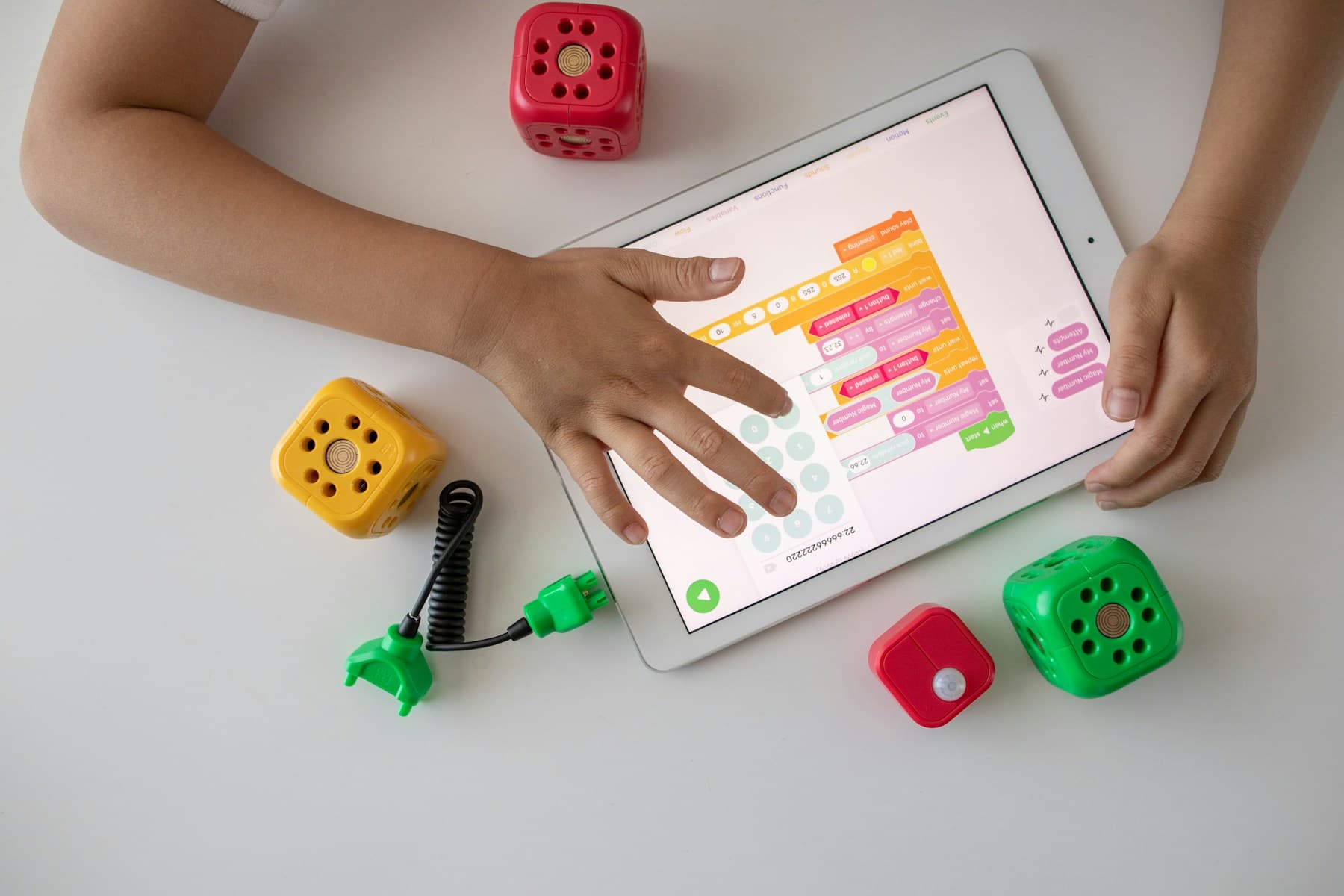
- 2Block-based coding: visual tools where students snap commands together to make animations, games and stories. Logic first, no syntax errors.
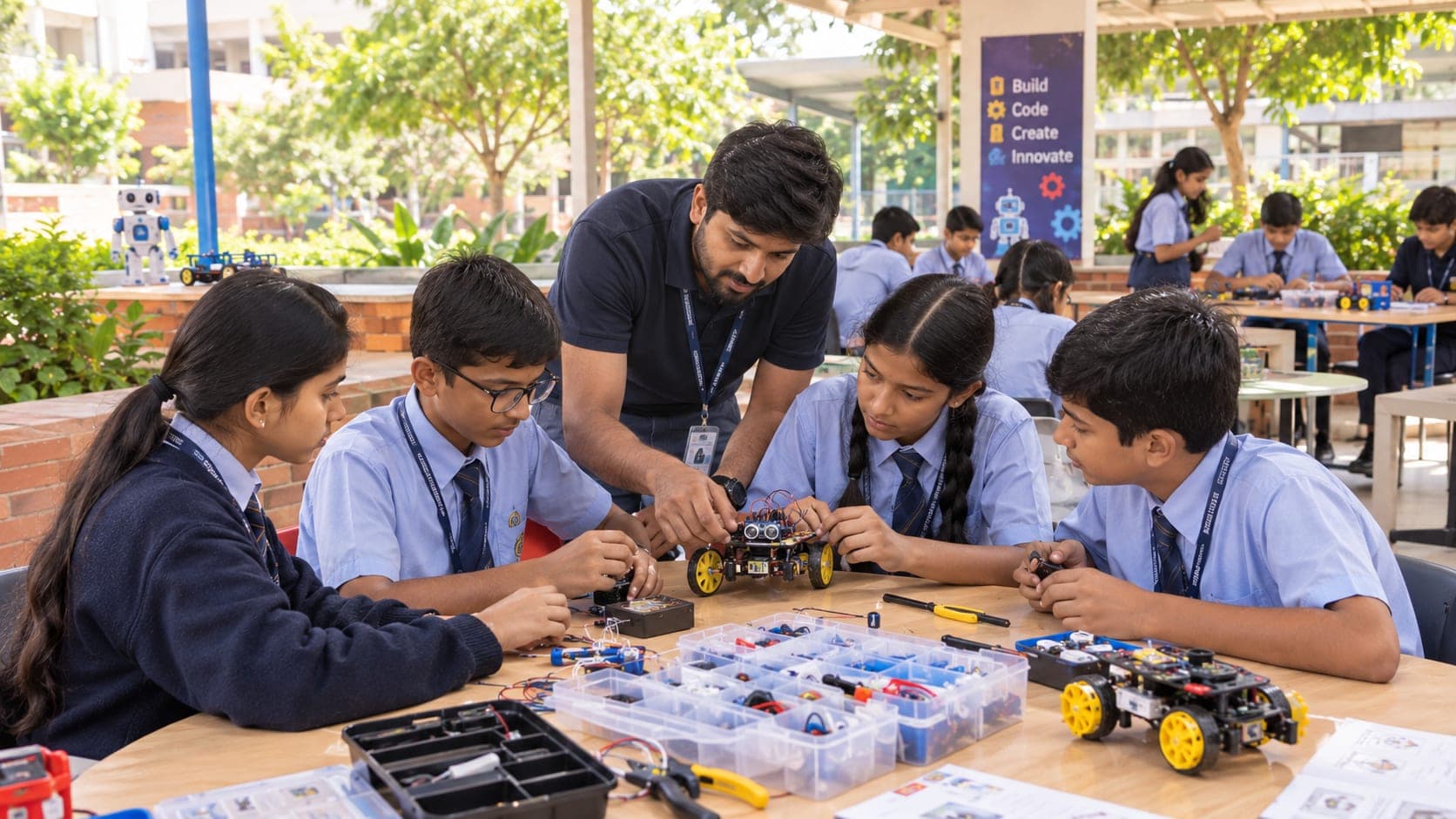
- 3Physical computing: coding a robot or a sensor so the result moves, lights up or measures something real. This is where many students get hooked.
- 4Text-based coding: by the upper grades, moving to a language like Python, ready for data, AI and more advanced projects.
Start where your teachers are
Teachers don't need to be programmers to teach Class 6 coding well. With structured lesson plans and hands-on training, computer, maths and science teachers can lead block-based and robotics lessons confidently.
Fitting it into the timetable
Coding works best as a regular weekly period rather than an occasional event. Schools often use the computer period, an activity or skill period, or a combination across the week. Consistency matters more than length: one focused period every week beats an intensive workshop once a term.
Assess projects, not just answers
NEP 2020 encourages competency-based assessment over rote learning. For coding, that means assessing what students build and how they think: does the program work, can the student explain it, and did they improve it after testing? Short reflections and project portfolios capture this better than a written test.
Linking coding with skills
The policy also introduces vocational exposure from Class 6, including short internships with local practitioners. Coding and making projects connect naturally with this: students designing a solution for a local shop, farm or workshop learn both technical and real-world skills.
Where to begin this term
- 1Pick one grade and one weekly period to start with.
- 2Train two teachers rather than one.
- 3Use a structured, grade-wise lesson plan with a project at the end of each unit.
- 4Show the results: a short end-of-term showcase gets parents and leadership behind the program.
Univerzia AI's AI & Coding program follows this progression from unplugged and block coding through to Python and applied AI, with lesson plans mapped to your board and training for your teachers. Always refer to the NEP 2020 document on the Ministry of Education's website for the policy's exact wording.
Planning something like this for your school?
Tell us about your grades, space and goals, and we'll show you how it could work in your school.